
Colorado is genuinely hard on patios, and not in a way that gets talked about enough. The clay soil along the Front Range swells when wet and contracts when it dries, freeze-thaw cycles repeat hundreds of times over the life of any patio material, and the intense UV exposure at altitude chews through concrete sealers faster than most warranties account for.
For most Colorado homes, pavers deliver better long-term performance. Concrete is more budget friendly upfront and still makes sense in the right situations. The real question is which patio material fits your soil, your budget window, and your actual maintenance expectations going in.
What Colorado’s Unique Climate Does to a Patio
Colorado’s Planning for Hazards program documents that roughly half the state sits on expansive soils with high or very high shrink-swell potential. Bentonite clay, common across the Front Range, expands when it absorbs water and pulls back as it dries, cycling through this with every temperature change across every season.
A poured concrete slab is one rigid unit with nowhere to go when ground movement happens beneath it. It either heaves as a whole or cracks at the weakest point, and in Colorado’s freeze-thaw cycles, that usually happens somewhere between year three and year seven, even on properly installed jobs.
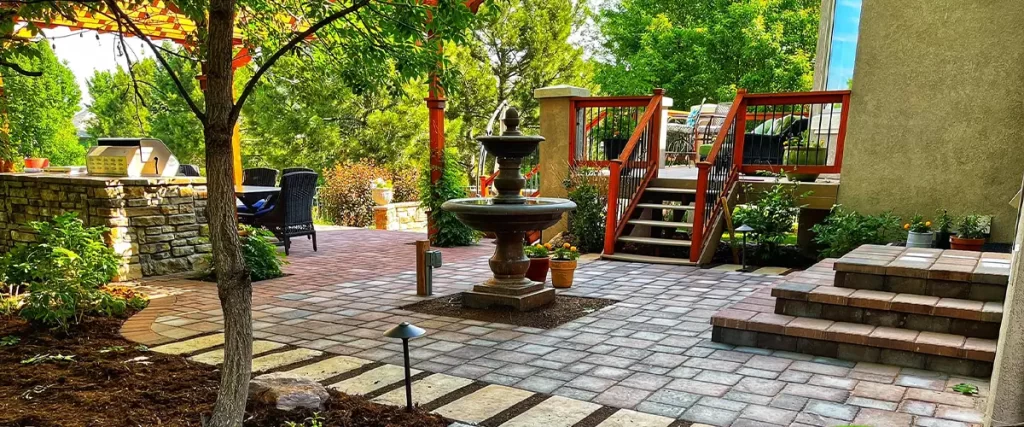
Individual pavers handle this differently by design. Each unit sits independently, so when the soil shifts slightly, individual units absorb that movement without pulling the entire patio into failure. The joints between pavers aren’t a flaw; they’re the whole point of why pavers benefit Colorado homeowners more than a monolithic slab does.
Proper subgrade preparation matters enormously here, regardless of material selection. Colorado’s unique climate punishes shortcuts at the base layer more than almost anywhere else in the country.
Which Patio Material Fits Your Project?
| Your situation | Better fit |
| Large area, budget friendly priority | Concrete |
| Heavy clay soil or drainage challenges | Pavers |
| Smooth, seamless outdoor living space | Concrete, stamped or exposed aggregate |
| Pool deck or consistently wet area | Pavers |
| Staying in the home 10+ years | Pavers |
| Selling within a few years | Concrete |
| South-facing patio with intense sun | Lighter pavers, lower heat absorption |
| Sloped yard or near retaining walls | Pavers |
| Maximum square foot coverage for minimum spend | Concrete |
| Design flexibility and color combinations | Pavers |
The Real Case for Concrete
Many homeowners come to this decision having already written off concrete, and that’s not entirely fair. A basic concrete patio, done right with the correct concrete mix, proper base preparation, and control joints placed thoughtfully, can last two decades and hold up well for most of them. Stamped concrete and exposed aggregate finishes add visual appeal that can closely approximate natural stone or brick at a fraction of the patio project cost.
The square foot installed price for concrete runs roughly $8 to $15, compared to $18 to $30 for pavers. On a large new patio, that difference funds real things.
Two maintenance expectations are worth understanding before committing. Hairline cracks will likely develop over time, given Colorado’s freeze-thaw cycles, and crack repairs on smooth concrete or stamped finishes are difficult to blend invisibly. Periodic sealing every two to three years is also part of proper care, given the intense sun hitting cured concrete at elevation.
For homeowners who want a clean, continuous surface for outdoor living spaces centered around an outdoor kitchen or open entertaining layout, concrete remains a practical and durable option despite those trade-offs.
The Real Case for Pavers
Pavers installation generally require more investment upfront, and that cost is real. What that investment buys in Colorado’s climate is long-term value that concrete struggles to match.
Natural drainage between individual units reduces pooling after afternoon storms. Better traction on wet surfaces matters around pool decks, flagstone-style entertaining areas, or shaded patios that stay damp for hours after rain. Future repairs stay local and invisible, where you pull the damaged unit, address the base, and reset it without disturbing the entire section around it.
The durability story here is tied directly to installation quality. A paver patio installed correctly on a compacted aggregate base of at least 6 to 8 inches will flex with ground movement rather than fracture under it. Skilled installation at the base layer is what separates a paver patio that lasts from one that sinks and shifts within a few seasons.
On the design side, running bond, herringbone, brick patterns, flagstone looks, natural stone accents, and custom color combinations all stay available long after the original patio project is finished. Choosing materials like concrete locks the design in on pour day. Pavers can be extended, rearranged, or adjusted years later without a seam showing.
For a closer look at how the installation process works, our paver installation page covers how we approach proper base depth and layout for Colorado conditions. If concrete or pavers are both still on the table for your project, our concrete services cover that side. And if the full budget picture is still coming together, our breakdown of landscape design costs in Colorado is worth a read before you start getting quotes.
FAQ
Does smooth concrete get slippery in Colorado weather?
Sealed concrete surfaces can become slippery when wet, particularly stamped finishes. Textured paver surfaces offer better traction as a patio material, which matters anywhere standing water or morning frost is a regular factor.
What is the right patio material for Colorado’s expansive soils?
Pavers generally perform better on Front Range soil because individual units shift slightly with ground movement rather than cracking under it. That said, concrete installed correctly with proper subgrade preparation and deep control joints holds up respectably in lower-movement areas.
Do pavers generally require a lot of ongoing maintenance?
Pavers generally require periodic cleaning, occasional resealing, and fresh joint sand every several years. Compared to concrete’s resealing schedule and the cost of crack repairs over time, the long-term maintenance load is lighter.
Can an entire section of cracked concrete be repaired without showing?
A crack can be filled, but matching the original color and stone type in stamped concrete is genuinely difficult. The repair will usually be visible, especially on high-traffic or high-visibility areas of the patio.
We Do This So You Don’t Have To
Choosing between concrete or pavers is the straightforward part of any patio project. Getting the grade right, managing drainage challenges specific to your yard, reaching proper base depth through Colorado clay, and building a surface that handles temperature changes and stays level after a hard winter, that’s where things get complicated fast.
We’ve built outdoor living spaces across the Denver metro in all kinds of conditions and soil types, and we’d genuinely rather you skip the part where this becomes a difficult lesson learned the hard way. Call us at (303) 766-3304 or message us here, and let’s figure out the right patio material for your specific yard.
